 Free Palm Reading
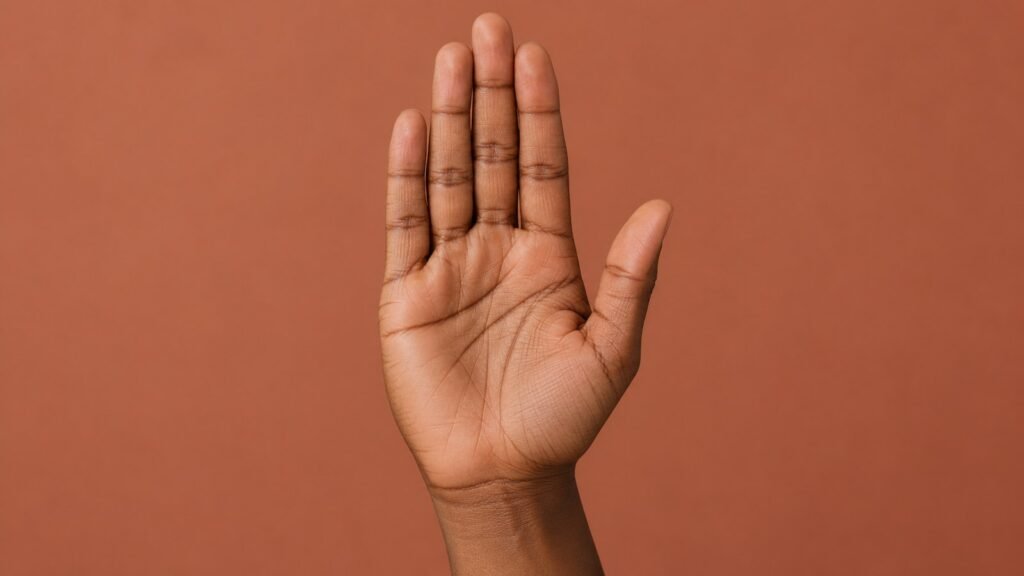
Hand-shape categories in palmistry are symbolic storytelling devices, not personality tests. You can explore them as a drawing or journaling activity without assuming that finger length proves intelligence, loyalty, leadership, or emotional sensitivity.
Describe the shape before choosing a label
Place your relaxed hand on plain paper and trace a light outline. Do not force your fingers together or stretch them widely. Mark where you are treating the palm as beginning and ending, then describe the outline in ordinary words: broader, narrower, longer, shorter, or hard to classify.
If you compare photographs, keep the camera approximately above the hand rather than tilted toward the fingertips. A change in angle can make the same hand appear to have different proportions. This is one reason an automated label should not be treated as a precise measurement.
What “earth,” “air,” “fire,” and “water” mean here
Some palmistry systems organize hand shapes using four element names. Descriptions and category boundaries differ between guides. Here the names are optional creative themes, not standardized classifications or factual statements about a person.
| Theme | Optional writing prompt | Evidence to use in your answer |
|---|---|---|
| Earth | What routine would I like to make more dependable? | A real task you want to complete consistently. |
| Air | What idea would I like to understand or explain? | A question, conversation, or subject you actually care about. |
| Fire | Which project deserves a small first step? | Your available time and a practical action. |
| Water | What feeling would I like to describe more clearly? | Your own words about a recent experience. |
You can choose any prompt regardless of your hand. Choosing a theme is an invitation to write, not a discovery that your body assigns you a personality.
A category-swap exercise
- Write three sentences about yourself before reading any symbolic description.
- Choose one theme and write a response using a specific recent event.
- Try a different theme. Notice whether it also feels relevant.
- Underline broad statements that could fit many people.
- Write one counterexample to any description you initially accepted.
If several categories feel accurate, that does not prove that your hand combines special powers. It may simply show that broad themes can apply to different parts of the same person’s life. Keep the activity open to disagreement.
A fictional worked example
Alex describes their palm as fairly broad but is unsure how to classify the fingers. Instead of forcing a label, Alex chooses “air” because they want to explain a school project. The concrete next step is to draft a two-minute explanation and ask a friend what remains unclear. The useful result comes from planning and feedback, not the palm shape.
Do not use a hand label to judge other people
Hand shape should not decide hiring, team roles, trust, compatibility, or whether someone is faithful. Ask about a person’s experience, preferences, behavior, and consent instead. Avoid labeling children or telling participants they lack a desirable trait because of their appearance.
Make a reusable reflection card
Use four fields: “What I noticed,” “The theme I chose,” “A real example,” and “One action I control.” Leave out predictions. For example: “I chose earth; I keep forgetting my project supplies; tonight I will pack my bag from a checklist.” That is a testable plan you can revisit next week.
Continue with the palm-reading reflection guide or the line orientation guide. Palmistry and generated readings are entertainment, not a validated assessment of character or a basis for important personal decisions. You do not need to upload a hand photo to complete this exercise.