 Free Palm Reading
Intuition in palmistry serves as a bridge between observed hand features and their symbolic meanings, yet it must be approached as an interpretive art rather than a source of certainty. Traditional symbols in palmistry reflect spiritual themes and personal reflection but do not guarantee specific traits, destiny, or supernatural insights.
Understanding Intuition’s Role in Palmistry
Intuition in palmistry refers to the personal insight or feeling a reader gains when observing a hand’s lines, mounts, and shapes. Unlike rigid systems or scientific diagnosis, palmistry relies on symbolic traditions that offer a language of interpretation rather than absolute truth. Observers often use intuition to connect traditional palm signs—like the heart line or life line—with broad spiritual themes such as love, vitality, or personal growth. This intuitive process is inherently subjective but can encourage self-reflection and awareness.
Crucially, intuition should not be mistaken for a supernatural ability to predict the future or uncover hidden facts. Instead, it operates as a reflective tool, helping readers explore possibilities and questions relevant to the individual. Since every hand is unique and cultural traditions vary, intuition enables adaptability, allowing a reader to weigh symbolic meanings without forcing definitive judgments. This balance maintains palmistry’s function as symbolic entertainment and spirituality rather than empirical fact.
Distinguishing Observation from Interpretation
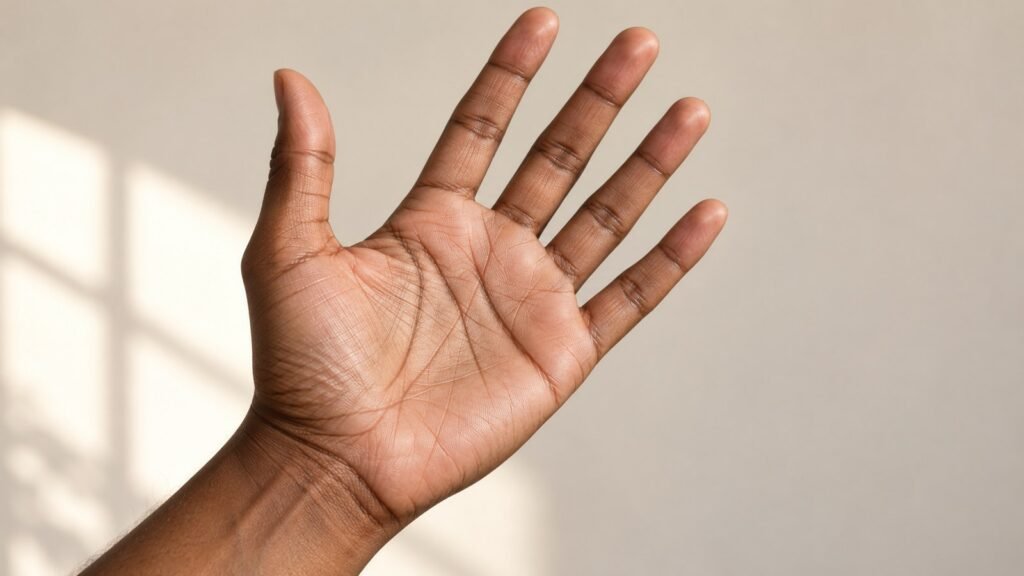
The first step in responsible palmistry is separating observation—what you physically see on the hand—from symbolic interpretation, which is how traditions ascribe meaning to those features. For example, the heart line is a visible curve or line under the fingers. Observing it accurately means noting its length, depth, and breaks without jumping to conclusions.
Traditional symbolism often suggests the heart line relates to emotional expression and relationships, but this is neither scientifically verified nor universally consistent. To practice well, focus on detailed observation: Is the line clear or faint? Does it fork or curve significantly? Is it intersected by other lines? Document these characteristics before reflecting on potential symbolism.
By distinguishing observation from interpretation, readers avoid projecting personal biases or fears onto a reader’s hand. It also guards against overinterpretation. The goal is to use the observed hand features as inspiration for meaningful questions rather than as fixed predictions or labels.
Step-by-Step: Developing Intuition Through Symbolic Themes
Building intuition in palmistry benefits from a structured method that combines close observation with thoughtful reflection on symbolic themes. Here is a simple step-by-step approach:
- Observe Noticeably: Examine the hand’s main lines (heart, head, life) and mounts (fleshy pads below fingers). Note clear patterns, breaks, or peculiarities without interpreting yet.
- Reflect on Symbolism: Considering traditional symbolism, relate these observations to general themes—such as relationships, intellect, or vitality—without making personal assumptions.
- Ask Open-Ended Questions: Use the symbols to inspire questions rather than answers. For example, “How does this person experience emotional connection?” instead of “They are untrustworthy.”
- Trust Emergent Insight: Allow intuitive impressions to form softly in your mind, recognizing their tentative nature.
- Encourage Personal Agency: Remind yourself and others that personal choices shape life experiences beyond symbolic reading.
This process prevents assertion of certainty and fosters a practice rich in symbolic introspection and personal empowerment.
Recognizing Common Symbolism Without Overstating Certainty
Traditional palmistry associates specific lines and shapes with broad symbolic meanings that have evolved historically as spiritual themes. These include:
- The Heart Line: Traditionally linked with emotional life, love, and relationships, a deep clear line is said to symbolize emotional clarity, whereas breaks may reflect emotional challenges.
- The Head Line: Connected with intellectual activity, thought style, and communication. A long, unbroken line often symbolizes clear thinking, while breaks or chains can mean mental restlessness in legends.
- The Life Line: Historically thought to reflect vitality and life journey, not literal lifespan. Curves and length symbolize general energy level or life changes symbolically.
- Finger Shapes and Mounts: Rounded or square finger tips symbolize different temperaments—such as creativity or practicality—in symbolic tradition rather than fact.
It is important to remember these meanings serve as symbolic starting points rather than proven personality or fate indicators. Intuition helps explore these themes gently without declaring exact truths or predicting outcomes.
Common Mistakes When Using Intuition in Palmistry
Applying intuition in palmistry without careful practice can lead to misconceptions and frustration. Common pitfalls include:
- Confusing Symbolism with Truth: Believing that line shapes or hand features reveal certain personality traits or future events is a misconception. Palmistry is not a science but a traditional system of symbolic reflection.
- Over-Interpreting Minor Variations: Small line breaks or irregularities are common and often meaningless. Reading excessive significance into them drifts away from thoughtful intuition into guesswork.
- Projecting Bias: Allowing personal expectations, stereotypes, or fears to shape interpretations rather than focusing on the hand’s observable characteristics.
- Assuming Universality: Different cultural systems assign varied meanings to similar hand features. Universalizing symbolism ignores these nuances.
A disciplined approach to observation and symbolic reflection—with an awareness of these potential mistakes—cultivates more thoughtful, respectful readings.
Fictional Example: Interpreting Intuition Symbolically
Imagine Alex, who decides to explore palmistry for personal insight. Upon looking at their left hand’s right palm, they notice a deep, curved heart line ending near the middle finger, a faint but long head line, and a strong life line curving around the base of the thumb. The mounts under the fingers are moderately developed, with a distinct but shallow mount beneath the ring finger.
Using traditional symbolism, Alex’s heart line suggests a warm, expressive emotional nature, while the clear head line indicates a thoughtful, reflective mind. The strong life line may symbolize vitality and a symbolic journey that has challenges but good energy. The pronounced mount under the ring finger traditionally relates to creativity or appreciation of beauty.
Rather than claiming these as facts, Alex uses this symbolic framework to ask themselves meaningful questions: “How do I express my emotions creatively?” and “In what ways can I nurture my mental clarity?” Alex’s intuition guides the reflection, helping them see themes in their life without assuming fixed traits or fate.
Practical Exercise and Takeaways
Try this simple exercise to develop your palmistry intuition responsibly:
- Choose a Hand to Observe: Pick your own or a willing friend’s open palm in good light.
- Careful Observation: Look at the main lines and mounts. Write down what you see without interpretation—length, breaks, curves, and relative prominence.
- Reflect on Symbolism: Use traditional meanings as general spiritual themes. Consider questions rather than conclusions. For example, the heart line might suggest zones of emotional awareness rather than particular feelings.
Three key takeaways:
- Intuition in palmistry should be a gentle reflective practice, not a tool for certainty.
- Focus on accurate observation, leaving symbolic meanings fluid and open.
- Use symbolic themes to inspire personal questions and growth, honoring free will and uniqueness.
For further guided steps and exploration, visit FreePalmReading.io’s step-by-step guide.
Comparison Table: Observation vs Symbolic Interpretation
| Aspect | Observation | Symbolic Interpretation |
|---|---|---|
| Heart Line | Visible line below fingers; note length, breaks, depth | Emotional expression, relationships, challenges |
| Head Line | Line across palm middle; note clarity, length, breaks | Thought style, intellect, mental restlessness |
| Life Line | Line curving around thumb base; length, curve shape | Symbolic vitality, life journey, energy levels |
| Mounts | Raised fleshy pads under fingers; prominence | Temperament traits like creativity or practicality |
Frequently Asked Questions About Intuition in Palmistry
Can palm lines predict my future with certainty?
Traditional palmistry symbolism offers themes for reflection but does not predict future events with certainty. Lines are symbolic rather than literal forecasts.
How does intuition differ from guessing in palm reading?
Intuition involves thoughtful, symbolic reflection based on clear observation and tradition, while guessing lacks this structured approach and often jumps to conclusions without evidence.
Are hand shapes scientifically linked to personality?
No, hand shapes and lines have no scientifically established connection to personality or life outcomes. Their meanings in palmistry are symbolic, rooted in tradition.
Is it possible to develop better intuition in palm reading?
Yes, by practicing careful observation, studying traditional symbolism, and maintaining an open and reflective mindset focused on questions rather than fixed answers.
Conclusion: Embracing Symbolism and Intuition with Balance
Intuition in palmistry is a valuable guide for symbolic exploration but should never be mistaken for immutable fact or supernatural certainty. By focusing on accurate observation, respectful use of traditional symbolism, and open-ended personal reflection, palmistry can serve as a rich spiritual and creative practice. This balanced approach empowers curiosity and insight while honoring individual freedom and the uniqueness of every hand.
Further Reading
- Cheiro’s Palmistry for All – A historical text providing traditional classifications and symbolism of palm lines and mounts.
- Palmistry the Future in the Palm of Your Hand – An exploration of historical chiromancy as entertainment and cultural tradition.
See what your own palm inspires
Bring these ideas to life with a reading focused on you. Choose a reading type and upload a clear palm photo to explore an encouraging interpretation.
Explore more palm reading and palmistry guides.