 Free Palm Reading
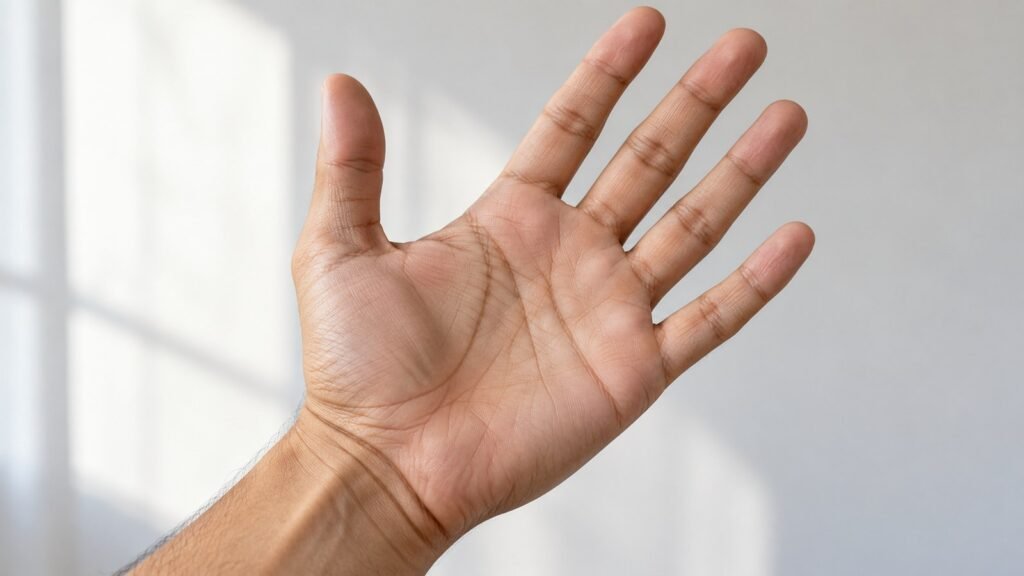
Palm reading can offer a symbolic lens to explore your current life phase and inspire reflection during times of transition. While palmistry lines and shapes do not predict exact events, they serve as traditional mirrors to consider your personal agency, choices, and feelings when embarking on a fresh start.
Understanding the Symbolism of Palm Lines for Reflection
Traditional palmistry centers on interpreting the major lines—the heart, head, and life lines—as well as various minor lines. Each line symbolizes aspects of emotional life, thinking patterns, or vitality, but these associations are reflective tools rather than definitive truths. For example, the life line is traditionally linked to vitality and change, not lifespan or fate.
When you look at your palm for a fresh start, observe whether these lines appear deep, faint, long, or short. A deep, clear head line might represent clarity and focus, encouraging you to consider how you approach decisions. Minor breaks or changes in lines can suggest periods of transition, which fits well during times of move or change.
Avoid assigning fixed meanings; instead, use your observations as prompts to reflect on your feelings, challenges, and hopes around new beginnings. Are you hopeful, anxious, or curious about what lies ahead? This awareness supports personal agency without claiming the lines control your fate.
Hand Shapes and Mounts: Reflective Symbols of Energy and Focus
Beyond lines, traditional palmistry considers hand shapes and mounts (the fleshy pads at the palm’s base) as symbolic of personality traits and predominant energies. For instance, an earth hand—broad and sturdy with square fingers—traditionally suggests practicality and groundedness, a helpful metaphor during transitions needing stability.
Mounts named after planets (e.g., Mount of Jupiter, Mount of Venus) are thought to reflect qualities like ambition or warmth. While these interpretations vary historically and culturally, noting which mounts are prominent or flat can encourage you to reflect on where your own energy is invested. For example, a pronounced Mount of Mercury might inspire reflection on communication skills and adaptability in new social situations.
When engaging with hand shape symbolism, be mindful to avoid fixed judgments about character or capabilities. Consider these traditional symbols as starting points for introspection—asking yourself how you want to channel your energy and which personal qualities you can rely on or develop in your fresh start.
Step-by-Step Reflection Method Using Palm Observation
To thoughtfully explore your palm as a reflective tool:
- Prepare: Choose comfortable lighting and a relaxed setting. Look at your dominant hand, traditionally connected to your present and future activities.
- Observe the major lines: Identify the heart, head, and life lines. Note their length, depth, and clarity without judgment.
- Notice secondary lines and markings: Look for minor lines, crosses, or breaks that might symbolize life’s complexities or transitions—these are symbolic, not literal.
- Examine the mounts and finger shapes: Consider which mounts are raised or flat and the basic shape of your hand. Use this to reflect on your energies and approaches.
- Ask personal reflection questions: For example, “What emotions do I associate with my heart line?” or “How does the clarity of my head line reflect my current decision-making?”
- Journal your impressions: Write down your observations and responses to these questions as a dialogue, not a diagnosis.
This method emphasizes self-awareness and personal agency. It transforms traditional palm symbols into prompts for understanding where you stand and where you might wish to direct your energy in new beginnings.
Common Mistakes When Using Palm Reading for Self-Reflection
Approaching palm reading with curiosity is valuable, but there are frequent pitfalls to avoid to keep the process honest and empowering.
- Misidentifying lines: Lines can be faint, forked, or blended, which leads to confusion. Take your time to distinguish them clearly and note variations without forcing interpretation.
- Expecting predictions or fixed meanings: Palm lines and shapes are traditional symbols for reflection, not proven predictors. Avoid expecting specific future events or personality truths.
- Projecting stereotypes: Do not link hand features to cultural or gender stereotypes; all hands are unique with multiple layers of symbolic meaning.
- Overloading on folklore: Historical palmistry texts vary widely in claims. Focus on symbolism as a tool to prompt questions you find meaningful rather than absolute truths.
By avoiding these errors, palm-based reflection remains a personal guide rather than a rigid framework, supporting you as you embrace your fresh start consciously.
Fictional example
Emma is preparing to relocate for a new job opportunity. She examines her palm to help process her feelings about this transition. On her dominant hand, Emma notes that her life line curves outward clearly, which traditionally symbolizes openness to change. Her head line is deep and straight, suggesting focus and rational thinking, while her heart line gently arches and is fairly long, reflecting sensitivity and care in emotional matters.
Emma sees a faint break in her head line, which she interprets as a visual metaphor for an upcoming important decision point in her life. The Mount of Jupiter on her palm seems prominent, representing ambition and confidence.
Using these symbols as reflection prompts, Emma asks herself how she can balance her analytical approach (head line clarity) with her emotional needs (heart line length) as she embraces new challenges. She also considers how to draw on her ambition for steady progress without losing sight of personal values. Though she knows the palm lines do not guarantee outcomes, Emma feels empowered to navigate her fresh start mindfully.
Comparison checklist: Palm Features for Fresh Start Reflection
| Palm Feature | Traditional Symbolism | Reflective Question |
|---|---|---|
| Life Line | Vitality, openness to change | How do I embrace transition in my life energy? |
| Head Line | Thought processes, clarity | How clear and confident am I in making new decisions? |
| Heart Line | Emotional depth, relationships | What emotional support do I want as I start anew? |
| Mount of Jupiter | Ambition, leadership | Where can I best channel my drive and confidence? |
| Mount of Venus | Warmth, passion | How can passion and care influence my path? |
Practical Reflection Exercise and Takeaways
Try this simple exercise to explore your palm and cultivate fresh start awareness:
- Set aside 10 minutes in a quiet space to examine your dominant hand slowly.
- Observe major lines and mounts with a neutral, curious mindset—focus on textures, shapes, breaks, and prominence.
- Journal three reflection questions inspired by your observations, such as:
- What new directions feel possible to me?
- What strengths can I rely on during change?
- What challenges or fears do I notice that I want to acknowledge or release?
Key takeaways for your fresh start journey:
- Use palm reading as a symbolic mirror, not a map of destiny.
- Focus on questions that empower your choices and emotions.
- Observe your palm with patience and without judgment.
You can explore these steps further with guided tools at FreePalmReading.io and begin your reflective journey with step-by-step reading prompts here.
Frequently Asked Questions
Can palm reading predict exact future events or dates?
No, traditional palmistry presents symbolic interpretations meant for reflection and personal insight only. It does not predict exact future events or specific dates.
Do the shapes of my fingers reveal my personality?
Finger shapes and lengths have symbolic meanings in palmistry traditions but are not scientifically linked to personality traits. Use such symbols as prompts for self-exploration rather than fixed character assessments.
What if my palm lines look very different from traditional descriptions?
Palms are highly individual, and traditional palmistry has many variants. Differences do not indicate problems or “better” outcomes. View variations as natural diversity and opportunities for unique reflection.
How often should I use palm reading for reflection?
There is no set frequency; use palm reading whenever a reflective check-in is helpful, such as before life changes or when seeking clarity on personal feelings and goals.
Conclusion: Embracing Change with Symbolic Clarity
Palm reading offers a gentle, symbolic way to engage with your thoughts and feelings during fresh starts. By observing the traditional lines, mounts, and hand shapes, you create reflective prompts that encourage self-awareness and agency. Remember to treat palm symbolism as a personal mirror, not a fixed map, allowing you freedom to shape your journey intentionally. This approach celebrates your ability to navigate change with openness, curiosity, and confidence.
Further Reading
- Cheiro’s Palmistry for All – A historical text offering traditional classifications and interpretations.
- Palmistry: The Future in the Palm of Your Hand – An overview of palmistry’s historical roots as entertainment.
See what your own palm inspires
Bring these ideas to life with a reading focused on you. Choose a reading type and upload a clear palm photo to explore an encouraging interpretation.
Explore more palm reading and palmistry guides.