 Free Palm Reading
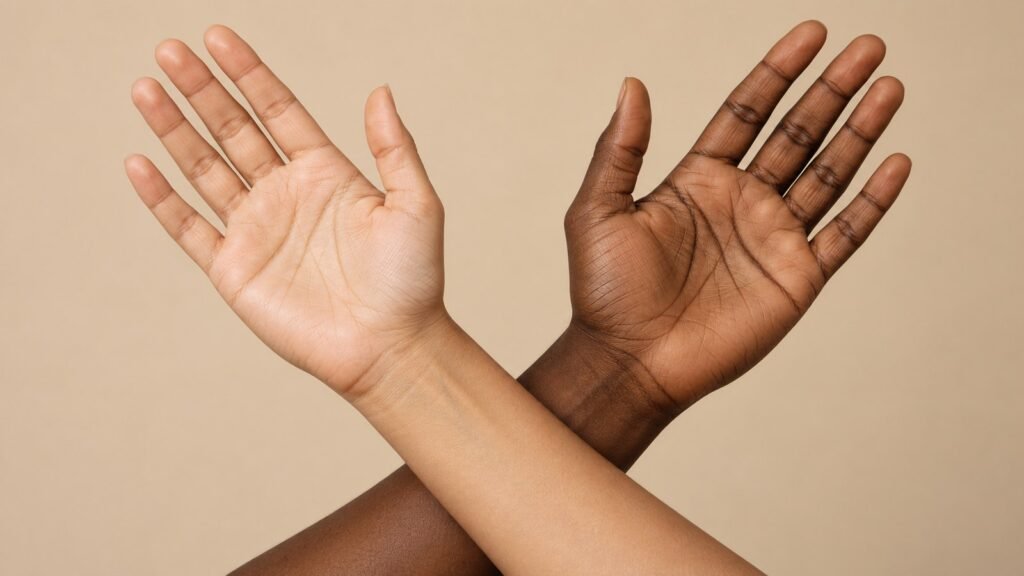
Editorial note: Palmistry is entertainment and folklore. A palm photo does not establish health, lifespan, personality, fidelity, or future events. The exercises below separate visual observations from optional creative themes.
Understanding the Life Line: A Practical Guide for Palmistry Enthusiasts
If you want to learn how palmists interpret the Life Line’s shape, this guide walks you step-by-step through observing and reflecting on the Life Line without making unsupported predictions. Your goal is to recognize and thoughtfully record its physical features, understand traditional associations, and practice clear separation between the visible crease and any guesswork about your vitality or lifespan.
Why Focus on the Life Line Shape?
The Life Line curves around the base of the thumb, commonly seen as the most prominent line on the palm. Traditionally, its length, depth, breaks, or shape have been linked to your energy, quality of life, and length of life. These folklore associations are not evidence about health, energy, or longevity. Your task is to look carefully and document, not forecast health or longevity.
How to Observe Your Life Line
Follow these decisions and steps. They help you identify key features while maintaining a thoughtful, respectful approach to what you see.
- Position yourself and your hand: Sit in natural light with your palm facing up and fingers slightly apart.
- Locate the Life Line: It starts between the thumb and index finger at the palm edge and curves down toward the wrist.
- Examine the overall shape: Is it long, short, smooth, broken, faint, or deep?
- Note any landmarks: Identify forks, breaks, islands (small markings enclosed by lines), or chains (linked loops).
- Take a photo: If possible, use a camera or smartphone to capture details for later reflection.
Checklist for Observing Your Life Line
- Is the line continuous or broken?
- Does the line curve deeply around the thumb mound or appear straight?
- Are there any distinct marks: crosses, chains, or islands?
- Is the line wide and deeply etched or faint and narrow?
- Does the line maintain a uniform thickness or vary along its course?
A Hypothetical Example: Reading the Shape, Not the Future
Imagine Jane examines her right palm. She sees a deep, long Life Line curving strongly around the thumb, with one small break near the wrist and a fork toward the end near the wrist. Jane records:
- Deep, clear Life Line
- Single break approximately 1 cm wide, about one-third down the line closest to the wrist
- Fork at the end of the line splitting into two smaller curves
- No chains or islands
From classical tradition, a deep Life Line can indicate vitality, and breaks or forks can signal changes or transitions in life circumstances. Yet Jane reminds herself these are symbolic associations, not factual health indicators.
What matters to Jane is that she observes carefully, notes what she sees, and considers any life reflections about periods of change, rather than predicting lifespan or health.
Key Comparisons: Long vs. Short Life Lines
| Feature | Traditional Interpretation | Observational Note |
|---|---|---|
| Long Life Line | Often said to indicate strong vitality and long life | Just a long crease; length varies naturally with palm size and shape |
| Short Life Line | Sometimes linked in tradition to lower stamina or less energy | A short line is a natural variation, not a health diagnosis |
Why this matters: Length alone doesn’t measure anything concrete about health or life span—it’s a physical characteristic shaped by hand structure, not a medical sign.
Troubleshooting Your Observations
Sometimes the Life Line is faint, has multiple breaks, or is hard to see. Here’s how to address this:
- Faint line: Try relaxing your hand fully; sometimes tension obscures creases. Use bright, indirect light to enhance visibility.
- Multiple breaks or chains: Record what is visible and what is uncertain; these features do not establish changes, challenges, illness, or impending events.
- Asymmetry between hands: Often lines differ between dominant and non-dominant hands. Consider both to see your full hand story.
Next Steps After Your Observation
- Write about a real transition if you wish; do not use breaks or forks to date or verify it
- Use a journaling worksheet to relate non-judgmentally the line’s features to your personal story—without pressure
- Respect that palmistry is historically symbolic rather than factual; avoid health or fate conclusions
- Optionally share your findings with others interested in palmistry for further discussion and reflection
Reflection Worksheet: Life Line Features and Personal Associations
- Describe your Life Line’s main visual features (shape, depth, breaks, forks):
- Choose a real change you want to write about, without claiming a crease dates or predicts it.
- What feelings or thoughts arise when you observe your Life Line as it is?
- What practical action would you choose based on your actual circumstances rather than a palm interpretation?
- What boundaries do you want to maintain between palmistry interpretation and your real-life health or lifespan decisions?
FAQs
Can the Life Line predict my lifespan or health?
No. The Life Line is a natural crease whose shape varies widely. Traditional palmistry links are symbolic, not evidence-based predictions.
Do breaks or chains on the Life Line mean illness or accidents?
No conclusion about illness or accidents can be drawn from those markings. Symbolic interpretations are not evidence of a medical condition or a future event.
Why are Life Lines different on each hand?
Do not interpret differences between hands as proof of inherited traits, potential, or future outcomes. “Dominant” and “non-dominant” hand meanings in palmistry are symbolic conventions.
How can I practice palm reading respectfully?
Focus on careful observation and thoughtful reflection, avoid making health or fate claims, and remember palmistry is primarily a cultural and entertainment practice.
For orientation on palm lines, see our visual guide here, and for reflection exercises, visit this resource.
Prepared with AI assistance for education, observation and entertainment. Palmistry does not predict outcomes or provide professional advice.