 Free Palm Reading
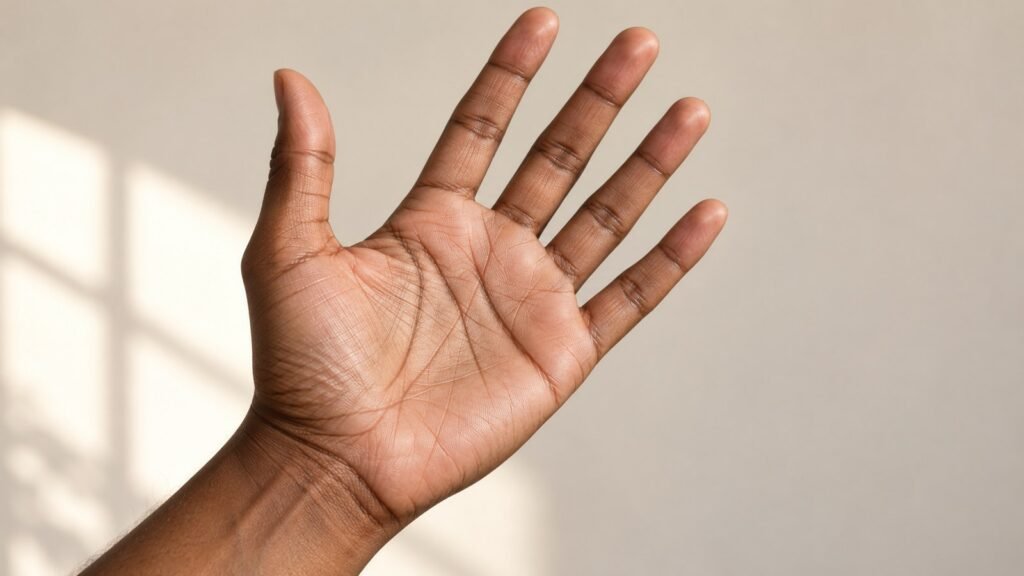
The Sun Line, traditionally linked to creativity and communication, is a subtle palm crease found just beneath the ring finger. To locate it, look for a fine vertical or slightly curving line that runs toward the Mount of Apollo under the ring finger; it’s often faint and may be confused with other minor lines. Careful observation, aided by natural light and gentle hand positioning, helps distinguish the Sun Line from surface creases or skin folds. Remember, its presence or clarity in palmistry reflects symbolic meanings, not proven traits or destiny.
Understanding the Sun Line’s Location and Appearance
To find the Sun Line, focus on the palm area beneath the ring finger (also called the Apollo finger). It usually runs vertically from near the base of the palm toward the finger’s root or the middle of the palm’s upper edge. Not everyone has a clearly visible Sun Line; it may be faint, broken, or absent. Unlike the heart or life lines, the Sun Line is typically thinner and less prominent. It can curve slightly or remain straight, and sometimes it forks or intersects with other minor lines. Because skin creases and natural folds may look similar, it’s helpful to position the hand in a relaxed, slightly cupped way under good lighting. Look for a true skin crease that runs more deeply and consistently beneath the ring finger, rather than surface wrinkles or shadows.
Keep in mind that in traditional palmistry, the Sun Line signifies creativity and expression, but variations in its shape, length, and intensity have no universal or scientific correlation to personality or talents. Its interpretation is symbolic and varies among palm reading traditions.
How to Distinguish the Sun Line from Other Palm Lines
A common challenge is confusing the Sun Line with other lines, like the Mercury Line (also called the health line) or minor decorative lines around the palm. The Sun Line specifically runs upward below the ring finger, often starting near the palm’s base or middle and ending beneath that finger. The Mercury Line, in contrast, runs below the pinky finger. The Head Line and Heart Line are more horizontal and cross the palm, so their directionality helps distinguish them.
To avoid misidentifying, gently stretch your fingers apart and observe the palm’s surface in natural light. The Sun Line’s vertical path under the ring finger is the key landmark. Also, note that skin folds across joints or small fine lines around the fingers may look like lines but lack the length and depth of a genuine palm crease. Avoid attributing significance to transient skin creases or to lines on the fingers themselves; traditional palmistry focuses on the palm proper.
Step-by-Step Method to Observe Your Sun Line
1. Sit in a softly lit room and relax your hand, palm facing upward with fingers slightly spread but naturally aligned.
2. Identify your ring finger (the fourth finger next to the pinky).
3. Examine the area directly beneath this finger toward the upper palm crease.
4. Look for any vertical or slightly curved lines running upward in this space.
5. Use a magnifying glass or your phone camera for close inspection if necessary.
6. Note the line’s length, clarity, breaks, or forks.
7. Compare with your other hand, as traditional palmistry often reads both but expects differences.
8. Avoid confusing faint wrinkles or finger creases with true lines. True lines tend to be continuous creases in the skin rather than shallow or temporary folds.
This process encourages focused observation rather than assumptions. Recording your observations in a notebook with sketches can assist learning and tracking changes over time.
Common Mistakes to Avoid When Locating the Sun Line
Many beginners struggle with distinguishing the Sun Line because it’s often faint or absent. Common errors include:
- Misidentifying finger creases or skin folds as the Sun Line.
- Assuming every visible vertical line under the ring finger is the Sun Line regardless of length or depth.
- Confusing the Sun Line with the Mercury (health) line which lies below the pinky finger.
- Overlooking that some people naturally lack a visible Sun Line or may have one on only one hand.
- Expecting symmetrical palm lines on both hands.
Fictional Example: Finding Clara’s Sun Line
Clara, curious about palmistry, examined her hands under a bright window. On her dominant right hand, below the ring finger, she noticed a slender vertical line running from the middle of her palm upward, slightly curving toward the finger’s base. It was thinner than the prominent Heart and Life Lines but clearly deeper than nearby skin folds. On her left hand, the same area showed minor skin creases but no strong vertical line. Clara sketched both palms, noting the evident Sun Line on her right hand only. Remembering traditional symbolism, she reflected on how this line represented creativity and personal expression—but she considered this an entertaining observation rather than an absolute fact. Clara’s methodical approach helped her distinguish the Sun Line confidently and sparked further interest in palm reading’s rich traditions.
Sun Line Checklist: What to Look For
| Feature | Details |
|---|---|
| Position | Vertical or slightly curved line beneath the ring finger’s base |
| Direction | Runs upward toward the finger, from mid or base of palm |
| Visibility | Often faint, thinner than major lines, may be broken or forked |
| Common Confusions | Finger creases, Mercury line (under pinky), surface skin folds |
| Occurence | May exist on one hand, both, or be absent entirely |
| Interpretation (Traditional) | Symbolizes creativity, artistic expression, communication talent |
Practical Exercise and Actionable Takeaways
To deepen your understanding of the Sun Line, try this simple exercise:
- Over the next few days, observe your hands in different light—morning, midday, and evening—to see how lighting affects line visibility.
- Sketch your palm outlines and mark any visible Sun Line placement and shape on both hands.
- Reflect journal-style on moments of creative or communicative expression during that time and note any associations you feel with your observations.
Key takeaways:
- The Sun Line is located beneath the ring finger and can be hard to spot.
- Focus on line position and depth to avoid confusion with other skin lines.
- Traditional symbolism connects this line with creativity, not fixed personality traits.
For guided steps on examining more lines and mounts, visit FreePalmReading.io’s starter guide.
Frequently Asked Questions About the Sun Line
What if I don’t have a visible Sun Line on either hand?
Many people lack a clearly defined Sun Line. This absence simply means the line didn’t form as a distinct crease; tradition suggests alternative creative energies may be expressed differently. It’s normal and reflects the variability in palm line formations rather than a missing trait.
Can the Sun Line disappear or change over time?
Palm lines can subtly change with age or skin condition, but deeply etched lines like the Sun Line tend to remain fairly constant. Temporary wrinkles or surface marks may appear or fade but should not be confused with the established crease.
Is the Sun Line related to health or the Mercury (health) line?
No. The Sun Line is traditionally linked to creativity and expression, while the Mercury Line (located under the pinky finger) is sometimes associated with health or communication in folklore, but neither line is a medical indicator or diagnosis.
Do both hands need to have the Sun Line for it to be significant?
Not necessarily. Traditional palm reading often compares both hands for a fuller picture but acknowledges that lines can differ between hands. A Sun Line on one hand alone still holds traditional symbolic meaning related to creativity and self-expression.
Conclusion: Embrace Your Sun Line as a Symbolic Reflection
Finding the Sun Line under the ring finger invites a moment of curiosity and self-observation rather than strict labeling. While traditional palmistry associates this line with creativity and communication, its presence or absence is just one of many symbolic markings in the ever-changing landscape of your palm. By carefully locating the Sun Line with mindful attention and avoiding common visual errors, you gain a small lens into centuries-old interpretive traditions. Remember, your unique qualities come from your own choices and experiences—not solely from lines on your palm. Enjoy the exploration as a personal, thoughtful practice of discovery and reflection.
Further Reading
- Cheiro’s Palmistry for All — A historical text outlining traditional palm line interpretations including the Sun Line.
- Palmistry: The Future in the Palm of Your Hand — Explores the cultural and entertainment role of palmistry through history.
See what your own palm inspires
Bring these ideas to life with a reading focused on you. Choose a reading type and upload a clear palm photo to explore an encouraging interpretation.
Explore more palm reading and palmistry guides.