 Free Palm Reading
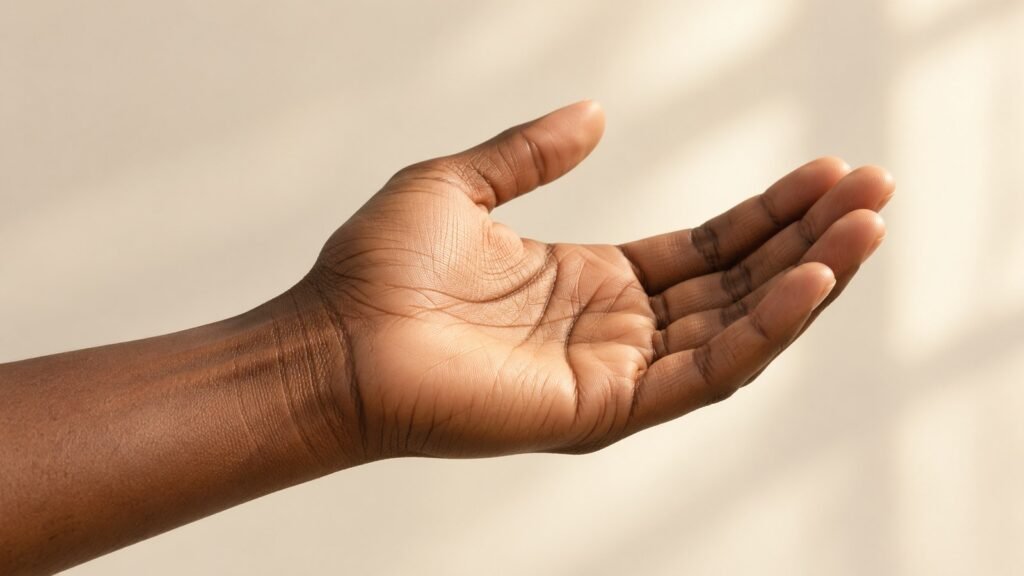
Keeping a palm reading journal is a practical, reflective way to deepen your understanding of palmistry as traditional symbolism. It helps you record observations, notice patterns over time, and develop personal insights, all while appreciating the historic meanings without confusing them with fixed personal traits or future predictions.
Why Keep a Palm Reading Journal?
Starting a palm reading journal offers a unique space to combine observation with reflection. Unlike merely reading lines or shapes in isolation, journaling encourages you to consider each hand in context. It allows for ongoing learning and helps clarify distinguishing actual features from assumptions or traditional symbolism. By noting what you see—such as the shape of the hand, the presence of major lines like the heart or life line, or unusual marks—you create an ongoing record that can reveal subtle changes or recurring patterns.
A journal transforms palm reading from guessing to thoughtful exploration. It encourages curiosity and personal agency since you decide what each element means for you. Rather than relying only on remembered folklore, journaling supports informed reflection grounded in your own observations. This active process helps reduce common pitfalls like jumping to conclusions based on popular palmistry clichés.
Choosing Your Journal Format and Materials
Deciding how to keep your journal is your first practical step. Some prefer a physical notebook—plain or graph paper—where they can sketch palms, write notes, and paste photos or tracing paper over time. This tactile experience often encourages a more deliberate, mindful approach and is easily accessible without tech.
Others opt for digital tools like note-taking apps or dedicated journaling software where photos can be imported, lines highlighted, and entries dated automatically. Digital journals simplify searching and offer the option to back up or share entries. Whichever format you choose, ensure it is convenient and invites you to return regularly.
Consider also what tools you’ll need: a reliable light source, a camera or smartphone for photos, pencils and pens with varying thickness, and possibly a magnifying glass. Good lighting and clarity are crucial to observe subtle lines and palm mounts accurately.
Step-by-Step Method to Record Palm Observations
Systematic observation is key. Begin each entry by dating and naming the hand’s owner (yourself or others). Photograph the palm in natural daylight from different angles or create a clear hand tracing on tracing paper. This visual baseline anchors your notes.
Next, record objective observations methodically:
- Hand shape: Note whether the palm is square, rectangular, or other shapes, observing finger length and finger shape ratios.
- Major lines: Locate and describe the heart, head, and life lines—mention general position, length, clarity, and intersections.
- Secondary lines: Observe fate, sun, health, or other minor lines, paying attention to breaks, forks, or crossings.
- Mounts: Note the padded areas believed traditionally to be linked with planets—observe prominence or flatness without assuming fixed meaning.
- Texture and skin quality: Record whether the palm skin feels smooth, coarse, or creased beyond the usual lines.
Avoid labeling these as definitive personality indicators or predictions. Instead, use open-ended phrases: “heart line appears clear and deep,” or “life line forks near the wrist.” This keeps your journal grounded in observation.
Interpreting Traditional Symbolism Carefully
Palmistry includes rich traditional symbolism tied to hand shapes, lines, and mounts. For example, a deep heart line has historically symbolized emotional sensitivity, while a forked life line was sometimes seen as indicating change. It’s important to treat these meanings as cultural stories rather than scientific truths.
When interpreting, frame traditional meanings as tools for reflection rather than factual traits. For instance, you might write: “The head line’s break here, traditionally thought to indicate a mental shift, invites me to consider moments of significant change or decision in this person’s life.” This invites personal insight rather than rigid characterization.
Because interpretations vary widely between palmistry traditions and cultures, avoid assuming universality. Use your journal to note alternative symbolism you encounter in different readings or historical sources. Most importantly, remember your journal is a space for exploration—not fixed truths.
Common Mistakes to Avoid in Palm Reading Journals
Newcomers often make a few predictable errors when starting their palm reading journals:
- Jumping to conclusions: Labeling lines or shapes as fixed indicators of personality or destiny rather than traditional symbols.
- Neglecting clear observation: Relying too heavily on memory or vague descriptions instead of detailed notes and photos.
- Overloading entries: Including too much commentary or mixing personal bias with objective observation.
- Inconsistent entries: Forgetting to date or organize entries, making it hard to track learning progress.
To avoid these, focus on clarity, objectivity, and gentle curiosity when recording each hand. Use your journal as an open, non-judgmental record of what you observe and think—not what you presume.
Practical Exercise & Actionable Takeaways
Try this exercise to start your palm reading journal:
- Select one hand: Your own or a willing friend’s.
- Observe in daylight: Photograph the palm and note lighting conditions.
- Follow the observation steps: Record shape, lines, mounts, and skin texture without assumptions.
- Research or review traditional meanings: Note any that intrigue you as prompts for personal reflection, not conclusions.
- Reflect and ask: What insights or feelings do these traditional symbols evoke for you? Could they relate metaphorically to your experiences or questions?
Returning regularly to your journal solidifies learning. You might also try comparing multiple palms or revisiting older entries to notice changes. For further reading and guided steps, explore resources at FreePalmReading.io.
Fictional Example: Journal Entry for “Anna’s Right Hand”
Date: June 15, 2024
Hand Observed: Right hand, adult female, age 29
Observations: The palm shape is somewhat rectangular, with fingers slightly longer than the palm. The heart line is deep and curves gently upward toward the index finger, traditionally interpreted as warmth and emotional openness. The head line is straight, clear, and slightly long, often linked symbolically to practicality and clear thinking. The life line is deep but shows a fork near the wrist, a traditional symbol of change or new directions in life. Several faint secondary lines cross the palm, including a subtle fate line running parallel to the life line.
Reflections: The fork in the life line resonates with Anna’s recent decision to change careers, suggesting the traditional symbolism can serve as reflective prompts. The clarity and length of the head line remind me to consider her practical nature, but I avoid assuming fixed traits. This entry reinforces that the palm can tell a story open to interpretation rather than fixed fact.
Useful Checklist for Your Palm Reading Journal
| Observation Aspect | Details to Record | Notes |
|---|---|---|
| Hand Shape | Overall palm shape; finger lengths; finger shapes | Describe objectively |
| Major Lines | Heart, head, life lines: length, depth, breaks, forks | Note clearly; no assumptions |
| Secondary Lines | Fate, sun, health lines or others present | Record visibility and pattern |
| Mounts (Palm Pads) | Prominence of mounts (e.g., Jupiter, Mercury) | Observe but avoid fixed meanings |
| Skin Texture | Smoothness, dryness, creases beyond lines | Note as background detail |
| Date & Context | When and whose hand observed | Essential for tracking progress |
Frequently Asked Questions
Can palm reading journals help me predict the future?
Traditional palmistry relates lines and shapes to symbolic meanings, but there is no scientific proof that palm reading predicts the future. Journals are best used for reflective exploration, not forecasting life events.
Should I write interpretations or just observations?
Begin with detailed observations—what you see objectively. Interpretations can be included as reflections but clearly separate them from facts to avoid confusion.
How often should I update my palm reading journal?
Regular updates enhance learning. Weekly or monthly entries help track changes, discoveries, and deepen your understanding over time without feeling rushed.
How can I avoid biases when journaling palms?
Focus on factual descriptions before interpreting. Use neutral language, and consider multiple traditional meanings. Check your own assumptions by comparing entries over time or with other readers.
Conclusion: Embrace Your Palm Reading Journal Journey
Keeping a palm reading journal cultivates patience, curiosity, and personal insight. By recording detailed observations and reflecting thoughtfully on traditional symbolism, you build a rich, ongoing dialogue with the craft of palmistry without confusing it with definitive truth. Your journal becomes a personal map of learning and discovery, encouraging exploration with respect and clear boundaries. Whether you use pen and paper or digital tools, your commitment shapes a valuable resource that deepens both knowledge and enjoyment. Start simply, stay curious, and enjoy the journey of insightful reflection through your palm reading journal.
Further Reading
- Cheiro’s Palmistry for All – A historical primary text offering traditional line and hand shape descriptions.
- The Future in the Palm of Your Hand – An overview of palmistry as historical entertainment.
See what your own palm inspires
Bring these ideas to life with a reading focused on you. Choose a reading type and upload a clear palm photo to explore an encouraging interpretation.
Explore more palm reading and palmistry guides.